


In 2006, Bernd Ruf, then a board member of Friends of Waldorf Education, encountered children and young people with traumatic war experiences in a refugee camp in Beirut, Lebanon. This experience led him to develop a comprehensive concept of Emergency Pedagogy. It was driven by questions such as: Can Waldorf education, with its methods, help children in acute crisis situations cope with extreme stress? Can it strengthen their self-healing capacities and at the same time prevent acute distress from developing into long-term psychological injuries? The human-made violence and the severe suffering of refugees in Lebanon thus initiated the first Emergency Pedagogy pilot project of Friends of Waldorf Education.
The first pilot projects in Lebanon, followed by responses to the devastating earthquakes in China in 2008 and the war in Gaza in 2009, were led by Bernd Ruf and supported by volunteers. These early initiatives laid important foundations that continue to shape our work today. Alongside the establishment of a dedicated Emergency Pedagogy department within Friends of Waldorf Education in Karlsruhe, the first Emergency Pedagogy Child Protection Centers were created—safe places where children could find stability, reliable caregivers, and creative activities inspired by Waldorf education. It became clear from an early stage that sustainable support means much more than short-term assistance.
Over time, individual projects evolved into long-term partnerships and independent initiatives. Today, Emergency Pedagogy teams of varying sizes, from five to approximately one hundred members, exist in more than thirty countries. In most cases, they emerged through the efforts of committed volunteers in their respective countries who joined together around a shared purpose. These teams respond to natural disasters, war, displacement, and other crisis situations, always adapting their work to local cultural and social contexts.
While the initial focus was primarily on providing acute “first aid for the soul,” attention gradually expanded to include long-term issues. Many of the children and young people we meet in our work are affected not only by current hardships but also by older wounds and unresolved experiences. As a result, we increasingly asked ourselves: How can we support people through acute crises while also creating space for deeper healing processes? To answer this question, experts and the Emergency Pedagogy team at Friends of Waldorf Education continuously refined and developed their methods. Today, insights from trauma-informed education and advances in psychotraumatology are integrated into our work. At its core, however, our approach remains rooted in the anthroposophical view of the human being and in Waldorf education.
As emergency pedagogues, we have repeatedly developed new approaches in response to unique circumstances. For example, our work in Ukraine revealed the need for specific educational methods tailored to supporting children in bunker environments. An educator from Kharkiv in eastern Ukraine describes how, during the many hours spent in shelters, she practices exercises with children that she learned through our Emergency Pedagogy training program. The bunker thus becomes more than a place of physical safety; it also becomes a space where children can engage in artistic activities and listen to fairy tales. When the first Iranian attacks on Israel occurred, our colleague from Ukraine was able to share her newly acquired experience with educators in Israel, who gratefully incorporated these approaches into their own work.
In Colombia, Emergency Pedagogy became part of a program for young people who are particularly affected by violence due to drug trafficking and poverty in their neighborhoods. In the Philippines, a team supported children under protection after they had become victims of digital violence. In Argentina, volunteer emergency pedagogues work with young people in prisons. Despite all these differences, one common insight emerges from these projects: healing rarely happens in isolation.
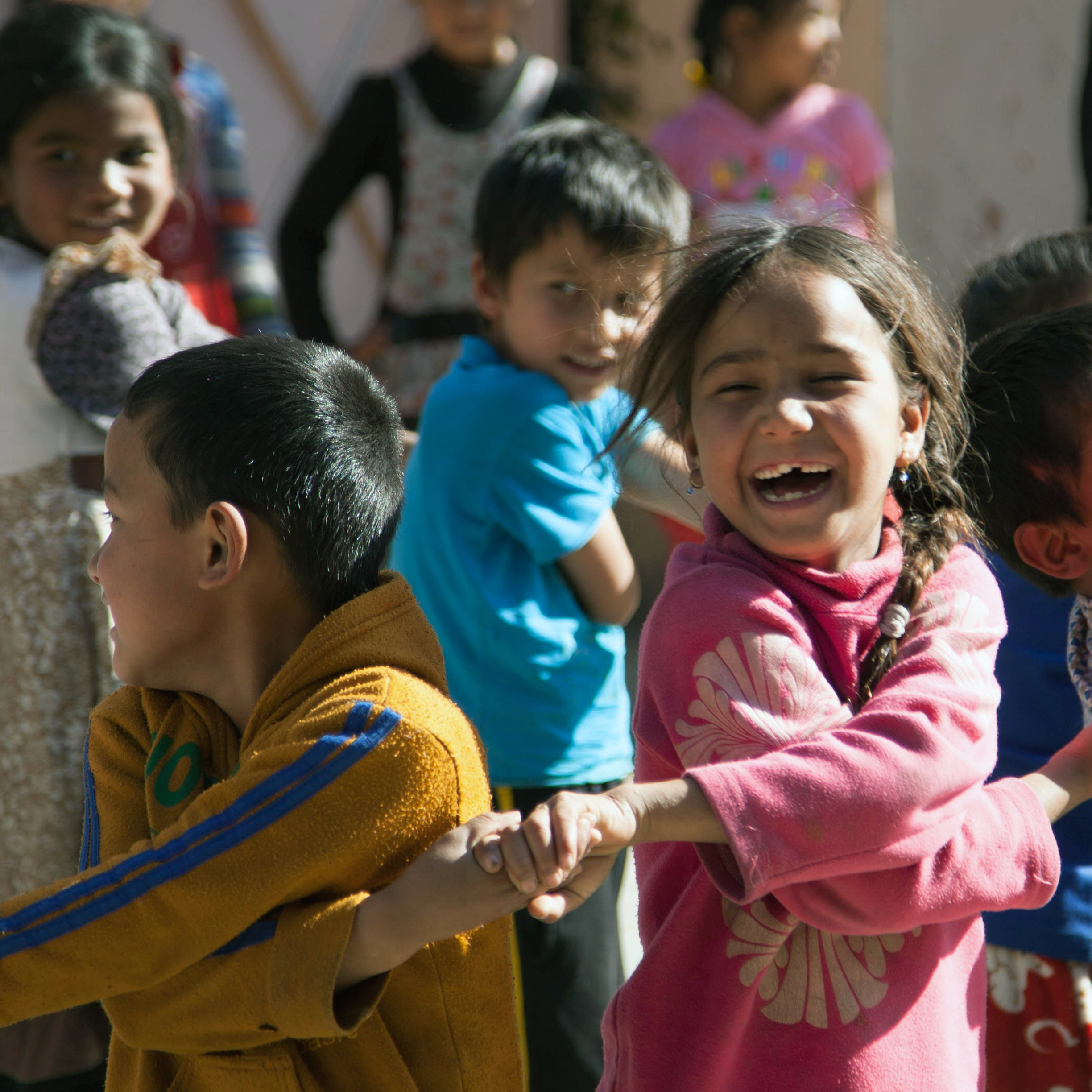
This became especially clear during our deployment to a refugee settlement in Uganda in April of this year. There, we worked with an organization founded by young refugees from the Democratic Republic of the Congo. Through their commitment, they create safe spaces where children can dance, play, and experience community. When asked where they find the motivation and strength to continue working with children despite limited financial and material resources, we repeatedly heard the same answer: “I want to pass on to our children what helped me.” Perhaps this sentence describes the essence of Emergency Pedagogy better than any technical definition. Through shared play, music-making, movement, and creative activities, children regain their capacity to act. Trauma often creates separation, from oneself, from other people, and from the world. Community can help restore these connections.
The demand for training in Emergency Pedagogy continues to grow worldwide. During seminars, professional experts teach the theoretical foundations of psychotraumatology and Emergency Pedagogy, as well as practical methods drawn from art, movement, experiential education, and other creative approaches. In recent years, one topic has gained particular importance: self-care. Those who support children in crisis situations also need ways to cope with their own burdens. In response, we have given this topic greater attention within our training programs.
Twenty years after the first interventions in Lebanon, the community of Emergency Pedagogy practitioners has grown into an international network with teams in thirty countries. More than 500 volunteers around the world are committed to supporting children and young people facing difficult life circumstances.
Looking ahead, we in the Emergency Pedagogy Department of Friends of Waldorf Education hope to continue supporting our colleagues around the world as effectively as possible in their work. We wish for children in crisis regions who have experienced traumatic events to have access to more places where they can activate their own self-healing capacities, with the support of educators who are able to fully utilize the potential of Emergency Pedagogy. We also envision places where helpers themselves can receive support and find moments to breathe and recover. To achieve this, we will continue, whenever possible, to respond to calls for assistance, always with the goal of enabling local colleagues to carry the work forward sustainably.
Fiona Bay