


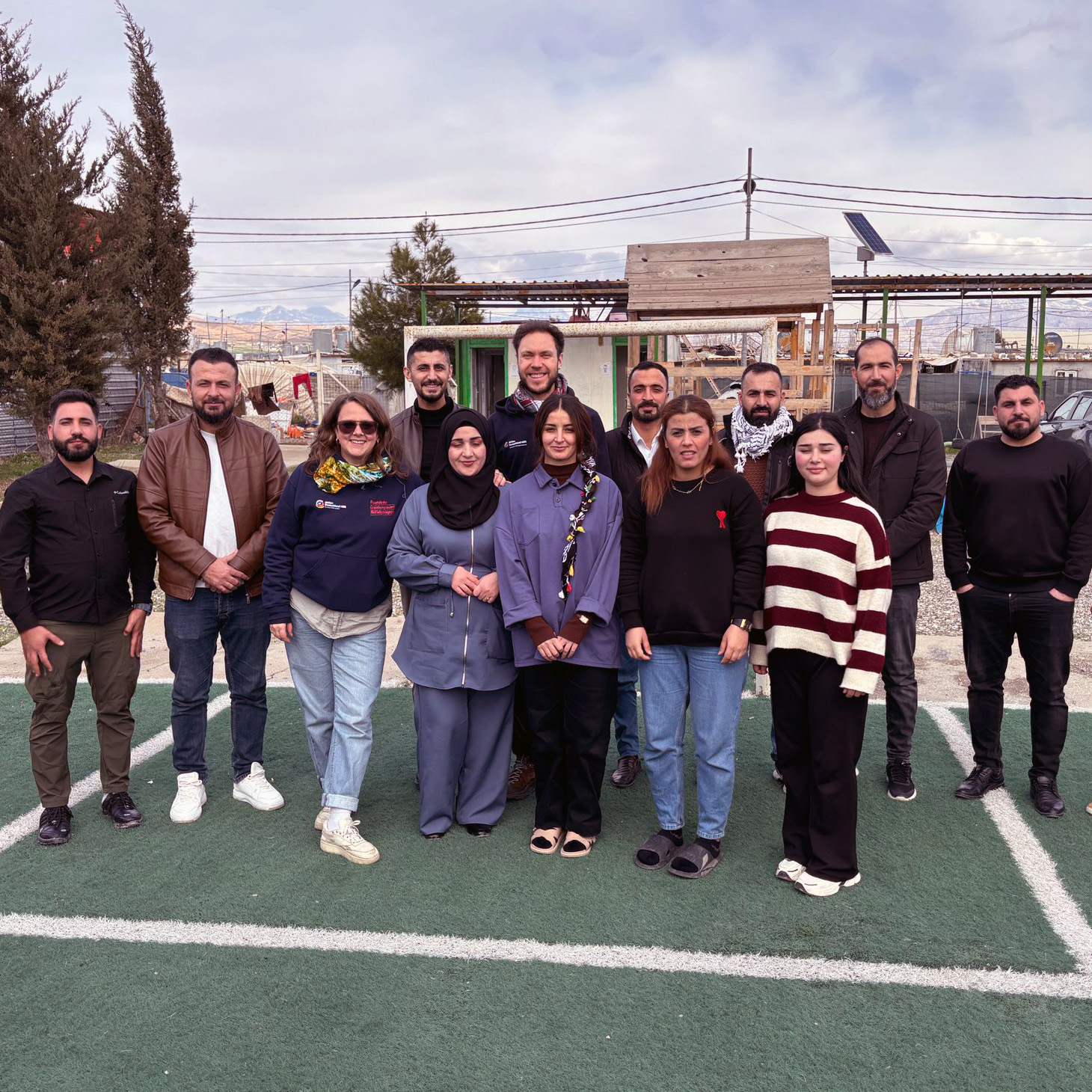
Hishyar, the founder and director of Island of Hope, has been active in emergency pedagogy for over a decade: "This work grew straight from my heart. For me, the priority is to see and understand every child as an individual, and to welcome and accept them unconditionally in all their aspects."
Hazhar is also a long-standing member of the team, responsible for personnel and finances. Like Hishyar, he is trainer in emergency pedagogy. In 2016, he was urgently seeking work and found it at a Child Friendly Space in a refugee camp. While he initially joined to secure a livelihood, his motivation soon transformed: "When I walk through the camp today, I see how well our children have developed. I have built strong relationships with them and the camp community."
Haebat joined the team two years ago and is responsible for Monitoring and Evaluation: "Even though I rarely participate in the pedagogical activities myself, I am part of this vital work. For the new project, I want to make the impact of our activities visible through evaluations to show people how effective emergency pedagogy really is." She is particularly convinced by the holistic view of the child: "Since becoming familiar with the work here, I would never want to put my children back into state structures."
Soline has been with the team for nearly a year and a half. She is very happy to work at Island of Hope and shared a particularly moving moment: "When the children run toward me with excitement at the CFS in the morning, it simply makes me very happy."
Saad started working for the organization six months ago. At the NGO where he previously worked, the focus was primarily on formal school activities."At Island of Hope, however, the focus is on building relationships, playful and age-appropriate development, and psychosocial support. This convinced me very quickly. Teachers, school administrators, and parents also consistently give us feedback that the children here are exceptionally competent in social interaction."
Jakob is an emergency pedagogue and team leader at the CFS in Chamisku, the largest camp for Internally Displaced Persons (IDPs) in Iraq. He has been active in the field since 2015. For him, the human-to-human encounter is the most beautiful aspect of his work: "The people from Sinjar have suffered unimaginable horrors. I want to give them the feeling of being at home and welcome here. Seeing the children happy gives me strength and hope. The feedback from parents about their children's positive changes shows me how effective and important our work is."
The Friends of Waldorf Education look forward to the new project and the continued partnership with Island of Hope. The profound motivation and experience of the staff will be key to the success of the planned programs. This collaboration provides traumatized children and youth with safe spaces in a region where independent structures are increasingly being established, allowing the methods of emergency pedagogy to flourish further.
Fabian Krämer