


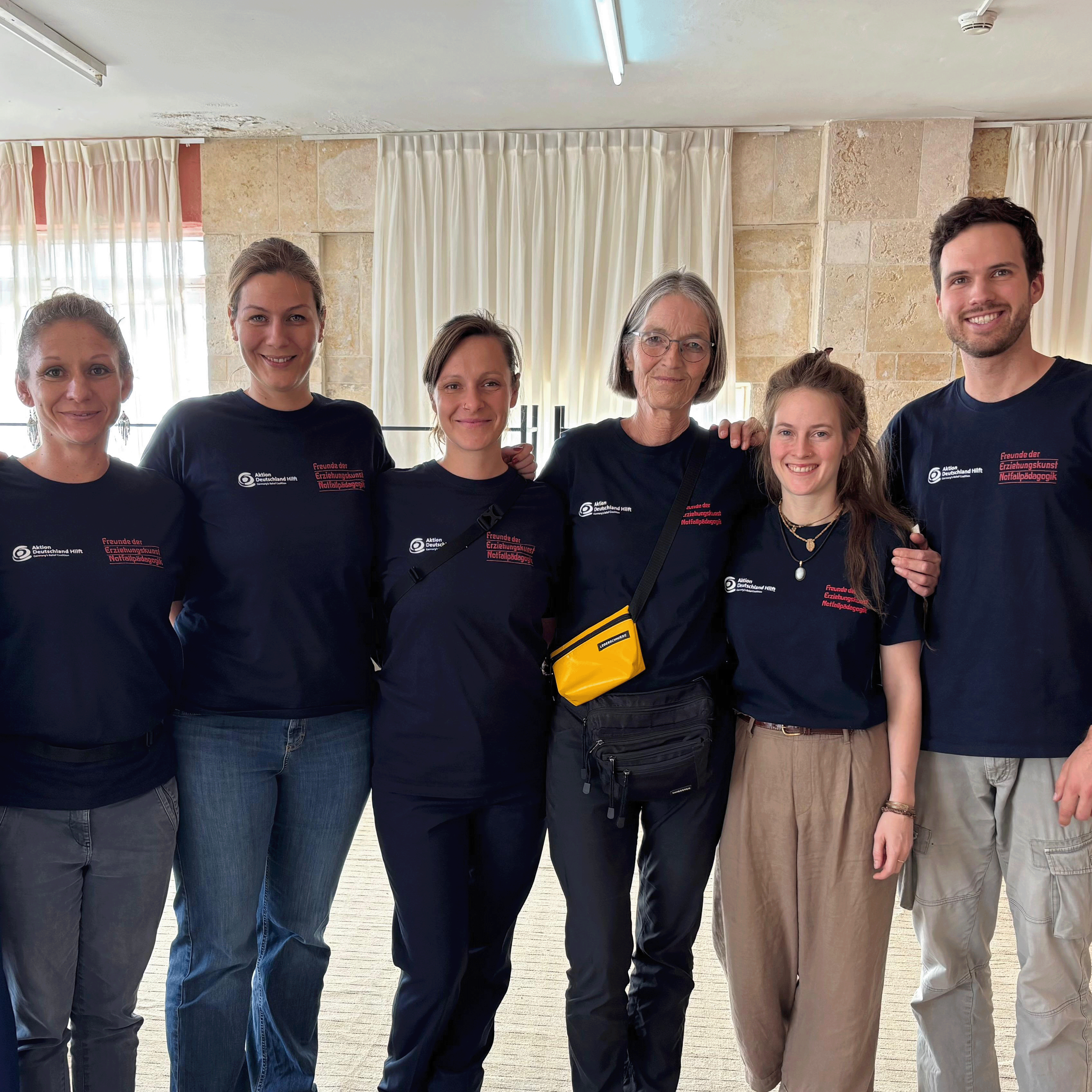
We experienced our third visit to the Hope Flowers School in Bethlehem as a state between tension and relaxation. The fragile peace plan for Gaza brings hope on one side but also fuels new fears: What will happen next in the West Bank? The aim of the training was to equip the participants with methods and ideas for their work with children and young people across various locations in the West Bank. Many schools now only operate three days a week, as salaries have been cut and some teachers simply cannot afford to travel five days a week anymore.
We continued our work with twenty teachers with whom we had already collaborated in January and introduced them to methods of emergency and trauma pedagogy. This time, the main focus was on how to apply emergency-pedagogical elements when working with children with disabilities at the school. In experiential and arts-based workshops, participants learned about different creative approaches, such as the difference between free and guided painting. They were also given space to ask concrete questions about specific cases or general challenges in working with children with disabilities, such as: “How do we design exercises for children who cannot physically participate in activities?”
During the six days, we were able to explore topics of emergency and trauma pedagogy together with the social workers and psychologists. The participants had already reflected on what trauma is, so it was important for them to clarify what truly matters when working with children—but also in caring for themselves.
In the arts-based workshops, the participants could feel the strength that lies in creative methods. After one sculpting session, a young psychologist sat in front of his work and expressed gratitude for having regained a moment of his childhood. In conversations, it became repeatedly clear how much stress people on the ground are living under and how rarely they find moments of peace. One participant shared that the first days of training had given her a sense of safety—so much so that she was finally able to let go again.
During these days, it became palpable to us how many resources the participants possess and, at the same time, how important such opportunities are for them to relax and simply breathe—to create spaces for the children where they can come together. And they dedicate themselves to this task with great commitment.
Fiona Bay