

From December 9th to 13th, 2024, an international six-person team of Emergency and Trauma Pedagogues traveled to Gaziantep for a second meeting with their colleagues from Syria. The team included professionals from various fields such as music and art therapy, as well as trained Emergency and Trauma pedagogues. The focus of this second meeting was primarily to deepen the practical sessions on music, movement, and art. However, the training of the educators from Syria coincided with the same week when everything in Syria was changing.
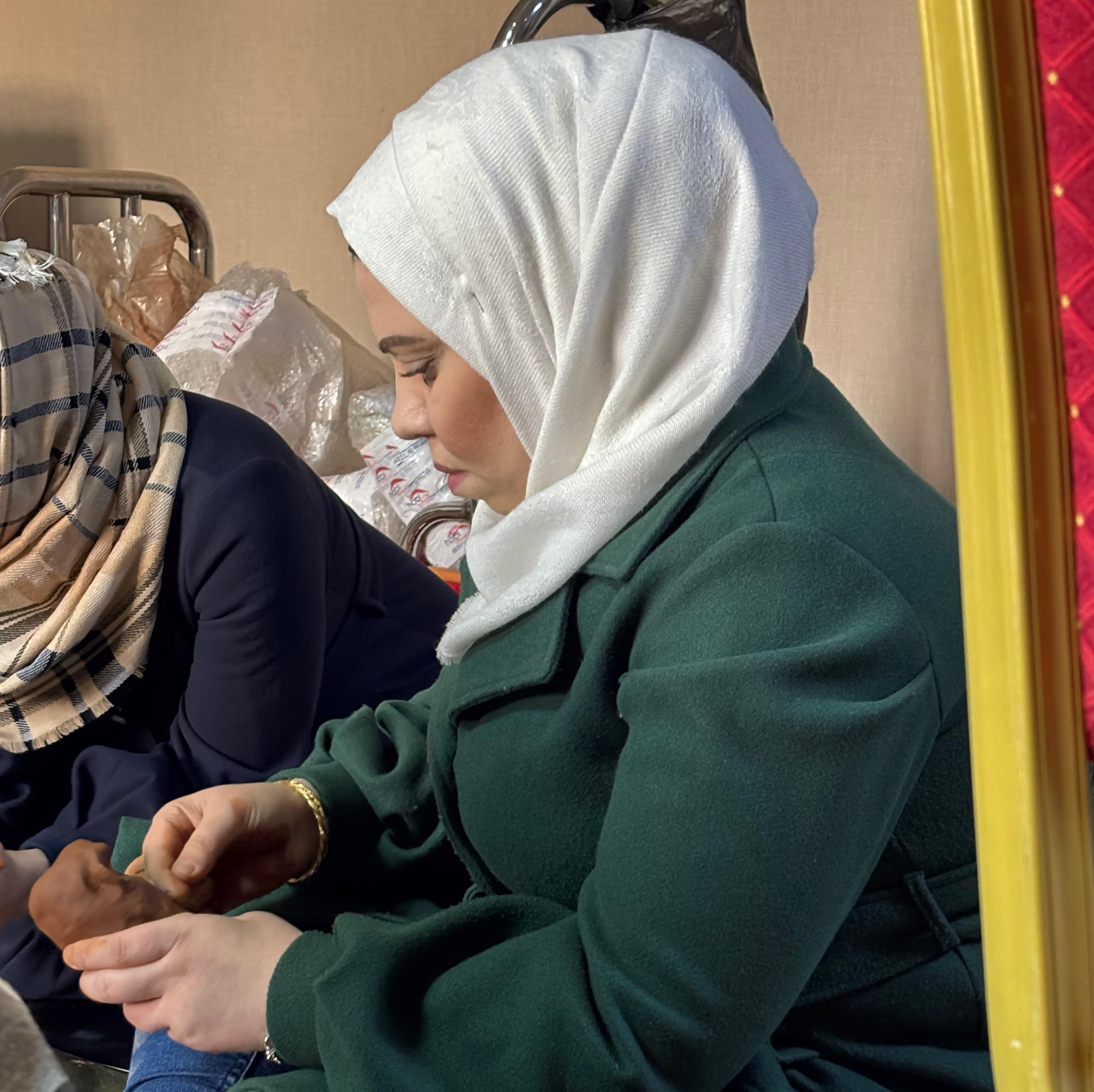
The political upheaval was subtly present throughout the week. Many participants could hardly sleep, constantly checking the news, and engaging in many discussions during breaks. They found themselves in a state between hope and disorientation, which was reflected in their work. For example, during clay modeling, participants chose to create both symbols like the peace monument in Damascus and representations of their own destroyed homes, hoping that they would soon be able to rebuild them. Despite the excitement, restlessness, hope, fatigue and mixed emotions of the Syrian educators, constructive work was still done together.
Faten Alabdullah from Aziz has been working as a social worker for a humanitarian organization active in Syria since 2019. She shares that the online meetings had already been a great enrichment for her. However, the in-person meetings in May and December were even more enriching for her. Since then, she feels more secure and well "equipped" in her work with children and parents. She directly started implementing some of the things she had learned after the training in May, such as painting with children or free play. Additionally, she is now able to better understand the children – even without words. "I've learned to observe more closely what the children want to communicate, without them being able to express it in words." For Faten, the timing of this second training was perfect. "We are going to return to a new Syria, and many challenges await us. For example, there are many children who were born and raised in Syrian prisons. I now feel much better prepared to work with them." She wants to pass on what she has learned to her colleagues.
Another meeting is already planned for next year. The situation remains uncertain, but everyone hopes to meet again and continue learning from each other through further exchange.
Fiona Bay