


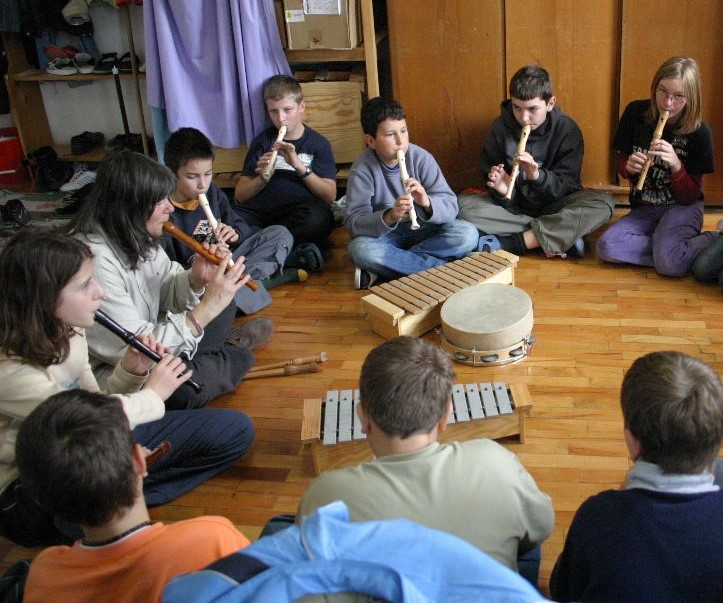
In addition to the Waldorf School in Cluj, which can already look back on a long history and considerable pedagogical experience, many Waldorf Schools have opened. Some schools are now fully developed primary schools from kindergarten to eighth grade. Two Waldorf schools in Transylvania, the schools in Cluj-Napoca and in Târgu Mures, are bilingual and operate a curriculum in Romanian and Hungarian. In the meantime, the other Waldorf schools started in Hungarian-speaking areas only. The oldest of them is located in Sfântu Gheorghe, followed by schools in Miercurea Ciuc, and later in Odorheiu Secuiesc-Polonița and Târgu Secuiesc. In addition to the existing schools, there are also promising initiatives, for example in Gheorghe.
The establishment of a large number of kindergartens and schools is mainly due to the will and initiative of parents who have managed to integrate Waldorf education and its practical implementation into the Romanian public school system. Although the state education system is the official sponsor of Waldorf schools, in reality it is the parents who help to develop the schools and create the appropriate conditions for the special features and needs of Waldorf schools. From a pedagogical point of view, Hungarian colleagues provide great support in the professional preparation of teachers. The lecturers at the Budapest Anthroposophical Pedagogical Workshop organise the Waldorf teacher training in Odorheiu Secuiesc in Hungarian - in professional coordination with the Federația Waldorf din România. The second three-year training programme concluded in August 2024 with 52 participants, most of whom are current and future teachers at Hungarian-language Waldorf schools in Transylvania.
Of course, the constraints of the public education system also pose a challenge for the institutions. This means not only limited autonomy, but also the need to harmonise state requirements with the age-appropriate aspects of the Waldorf curriculum. At a professional level, the curriculum research work that has been ongoing for two years has been extremely helpful. Regular face-to-face meetings inspired the educators in Transylvania to undertake thoughtful and well-documented practical research.
My personal experience is that the work of excellent and enthusiastic educators in Waldorf schools is full of promise. They are working to put Waldorf education into practice as far as possible by embedding their work with the methodological principles and the content of the curriculum in the local culture.
The greatest challenge facing Waldorf schools in Transylvania is the task of founding a lyceum (upper school), as this means establishing a new school, both in terms of subject matter and organisation. This requires strengthening the existing middle schools and the professional training of upper schoolteachers. And there needs to be a real dialogue and understanding between parents, teachers and representatives of the Federația on this issue.
APM lecturers and invited experts will continue to support the work of the schools in Transylvania, and we will endeavour to build a fruitful relationship within the Waldorf movement in Romania.
Gábor Kulcsár